On July 7, 2008, San Miguel de Allende was declared aUNESCO World Heritage Site — which makes us very proud.
And on November 16, 2010, the traditional cuisines of Mexico were declared Intangible Heritage of Humanity by UNESCO — a mosaic and a globally unique fusion, from pre-Columbian cuisine blended with European ingredients, techniques and ways of preparing food.
Long before the “Traditional Mexican Cuisine” concept was born, our Mayan, Olmec, Tarascan, Zapotec, Totonac and Toltec ancestors fused their culinary traditions, cultures, customs and ways of cooking. Thousands of years before the Spaniards arrived — before Rome was even a village — a regional fusion cuisine was developing here.
Tenochtitlan (today’s Mexico City) was invaded by the Spaniards, and after two years of cruel battles, when the city was finally defeated, the Spanish–Mexican cuisine fusion was born. Many indigenous courses were accepted by the invaders and many more were lost; the accepted ones were adapted and joined by ingredients the Spaniards brought as part of their own cuisine.
What is not often noted is that most forms of “Spanish” culture came with a strongMiddle Eastern influence, due to the Moorish rule of Spain for more than 700 years — present in our regional cuisines through fruits and spices such as cinnamon, ginger, sesame seeds, cloves, cumin and nutmeg.
Probably the most valuable ingredient contribution was pork — an easy-to-feed animal bred in back yards, providing fat to fry, easier to keep fresh than beef, and a perfect match for all the pre-Columbian ingredients.
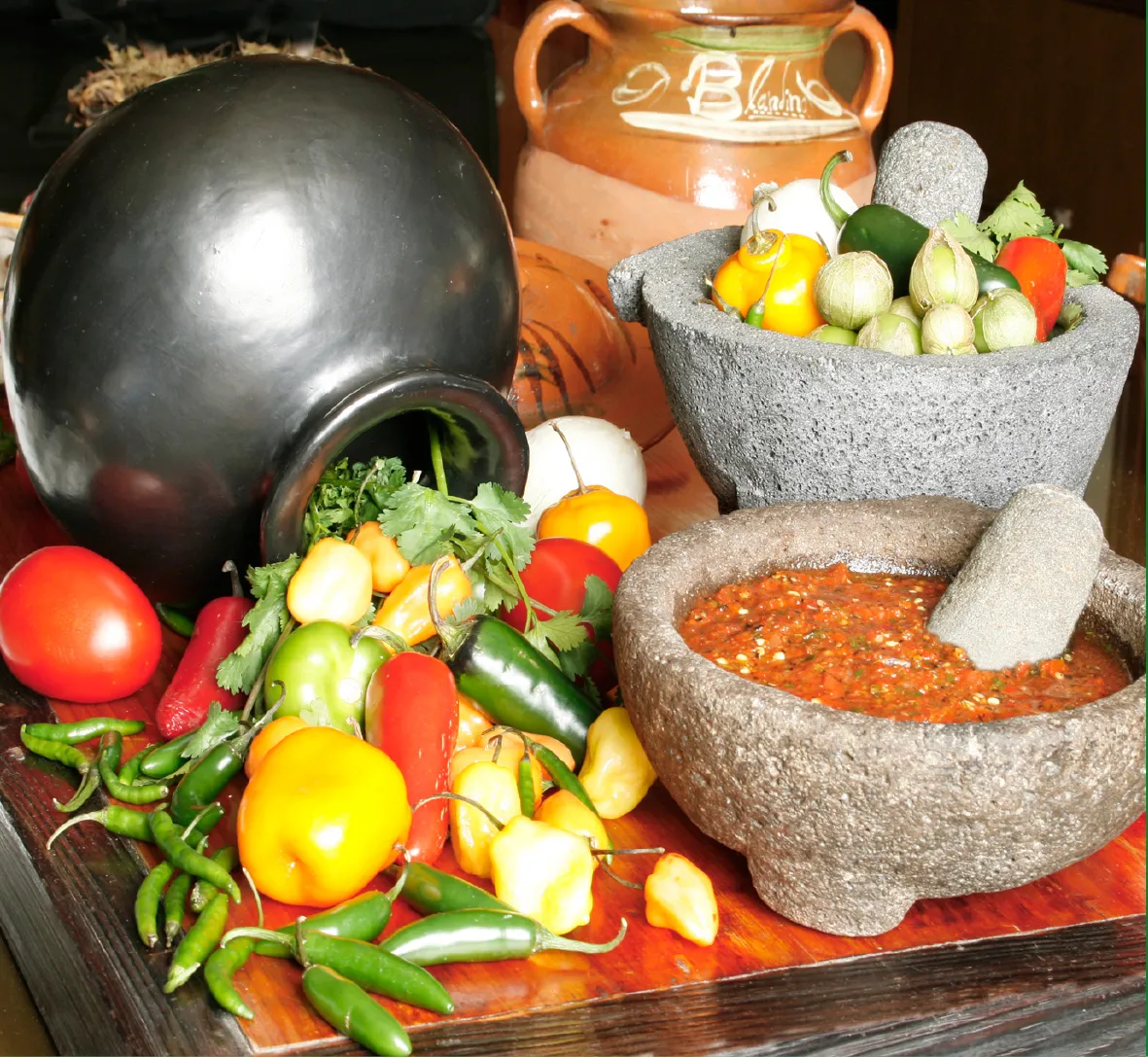
As many ingredients as we received from other cultures, many more we gave to the world.Can you imagine French or Swiss pastry — or any dessert — without chocolate or vanilla? Italian food without tomatoes? Thai, Indian or Chinese food without chiles? Other cuisines without beans, avocado, tomatillo, pumpkin? Tomato, chocolate, vanilla, chiles and many other ingredients are the valuable gifts we gave to the world.
Mexico was invaded again, this time by France, resulting in the coronation of Maximiliano as Emperor of Mexico. He brought his court and his chefs, adding a touch of their cuisine to our sauces, soups and pastries — making them even more complex and unique.
The real Mexican cooking was kept in households as “Home Cooking”, for special occasions and everyday meals alike. This home cooking is rarely found in restaurants and is nearly unknown to today’s generations, in great part due to foreign influences.
In her Ancestry Mexican cooking school, Marilau teaches this Intangible Heritage of Humanity “Home Cooking” — preserving all the knowledge, techniques, ingredients and methods she inherited from her family for more than 200 years.
The most common ingredients of today’s endless varieties of Mexican cuisine include tomato, onion, corn, chiles fresh and dry, pumpkin seeds, sesame seeds, almonds, pecans, raisins, pears, peaches, apples, quince, peanuts, tomatillos, cinnamon, cloves, cumin, oil, garlic, salt and pepper — many of them brought by the Spaniards to our country.